
What is Kunzite? The Pink Gemstone of Unconditional Love
What is kunzite?
Kunzite is a beautiful gemstone belonging to the spodumene mineral family, known for its pink to lavender hues — caused by traces of manganese. The stone has a fascinating property called pleochroism: its color changes depending on the viewing angle, from light pink to deep violet. Kunzite scores 6.5 to 7 on the Mohs scale and is valued for its spiritual significance as a stone of unconditional love and peace. View our purple jewelry collection for kunzite and other pink and purple gemstones.
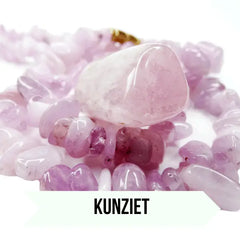
History and locations of kunzite
Kunzite was first described in 1902 and named after the American gemologist George Frederick Kunz, who first scientifically described the stone. The stone was discovered in California, but is now mined in Brazil, Afghanistan, Pakistan, and the United States. Afghan kunzite is known for its deep, rich pink color. Always choose ethically sourced stones when selecting kunzite for jewelry.
Characteristics of kunzite
Color — pink to lavender, caused by traces of manganese. The more intense the pink color, the more valuable the stone. Pleochroism — the color changes depending on the viewing angle: light pink, deep violet, or colorless. Hardness — 6.5 to 7 on the Mohs scale: durable but susceptible to scratches with careless handling. Note: prolonged exposure to direct sunlight can cause kunzite's color to fade — store in a dark place.
Use of kunzite in jewelry
Kunzite is used in rings, pendants, earrings, and bracelets. The soft pink to lavender hues combine beautifully with both silver and rose gold. Kunzite is often faceted to emphasize its pleochroic play of color. Combine with matching crystal jewelry for a complete, elegant look.
Spiritual meaning of kunzite
In gemstone therapy, kunzite is seen as a powerful healing stone and a symbol of unconditional love and peace. It can help in releasing negative emotions and achieving emotional balance and serenity. Kunzite is connected to the heart chakra and is used to promote love, compassion, and inner peace.
Frequently asked questions about kunzite
- Is kunzite suitable for everyday wear?
- Kunzite is durable enough for everyday wear in earrings and pendants, but caution is advised with rings due to its susceptibility to scratches and hard knocks. Protect the stone and store separately from harder gemstones.
- Does kunzite fade in the sun?
- Yes, prolonged exposure to direct sunlight can cause kunzite's color to fade. Store jewelry in a dark, dry place when not in use.
- How do I care for kunzite jewelry?
- Clean gently with a soft cloth and lukewarm water. Avoid aggressive cleaning agents, heat, and chemicals. Protect from hard knocks and direct sunlight. Store separately in a soft pouch.
- What is the difference between kunzite and pink tourmaline?
- Both are pink gemstones but chemically different. Kunzite is a spodumene mineral with pleochroism; pink tourmaline (rubellite) is a tourmaline variety. Pink tourmaline is harder (7–7.5) and less sensitive to sunlight. Read more on our andalusite encyclopedia page for another pleochroic gemstone.
- What spiritual properties does kunzite have?
- Kunzite is associated with unconditional love, peace, and emotional healing. It is connected to the heart chakra and is used to release negative emotions, achieve emotional balance, and promote love and compassion.